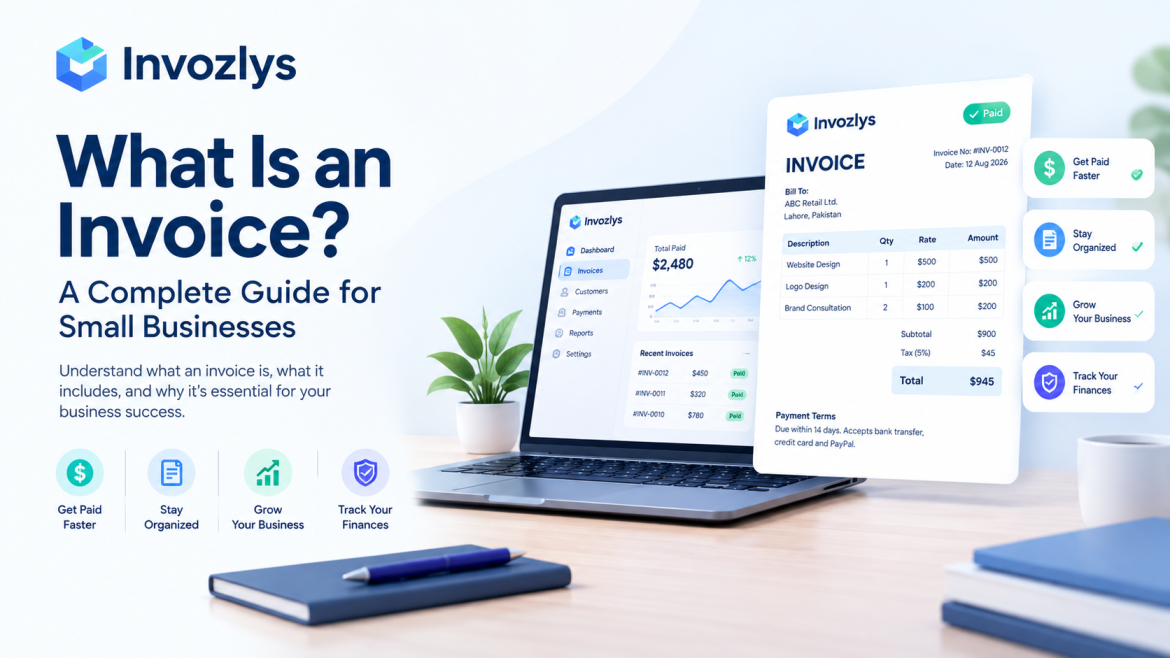
If you’re self-employed, freelancing, or running a small business in the US, you’ve probably typed up an invoice a hundred times without thinking too hard about it. Type the amount, send it off, wait to get paid, done, right?
Not quite. An invoice isn’t just a request for money. It’s a legal record of a transaction, your proof if a client disputes a charge, and part of the paper trail the IRS expects you to keep. Get it right, and invoicing becomes one of the simplest things you do all month. Get it wrong, and it can cost you in late payments, disputes, or a rough afternoon during tax season.
This guide breaks down what an invoice actually is, why it matters more than most people realize, and how to create one properly without paying for software you’ll barely use.
Why Invoicing Properly Actually Matters
It’s tempting to treat invoicing as busywork. In practice, a clean invoice is doing three jobs at once:
It gets you paid faster. When your payment terms, due date, and total are crystal clear, clients don’t have to guess or stall. Vague invoices are one of the easiest ways to end up chasing a payment for weeks.
It protects you if there’s a dispute. A detailed, itemized invoice, what was delivered, when, and for how much leaves very little room for a client to argue about what they agreed to pay for.
It backs you up at tax time. The IRS doesn’t require a specific invoice format, but it does require records that clearly document your income and expenses. Consistent, sequentially numbered invoices are exactly the kind of documentation that holds up if your return ever gets a closer look.
In short: invoicing is quiet infrastructure. Nobody notices it when it’s working but everybody notices when it isn’t.
Invoice Generator for Freelancers
This isn’t a niche concern anymore. Independent work has become a massive part of the US economy: Upwork’s 2026 workforce research found that roughly 39% of US workers did freelance work in the past year, and broader estimates put the number of Americans freelancing in some capacity above 70 million.
That’s a lot of people competing for the same clients. When the market is this crowded, the small things like sending a polished, professional invoice instead of a scribbled note are what separate businesses clients trust from ones they don’t.
What US Law Actually Requires on an Invoice
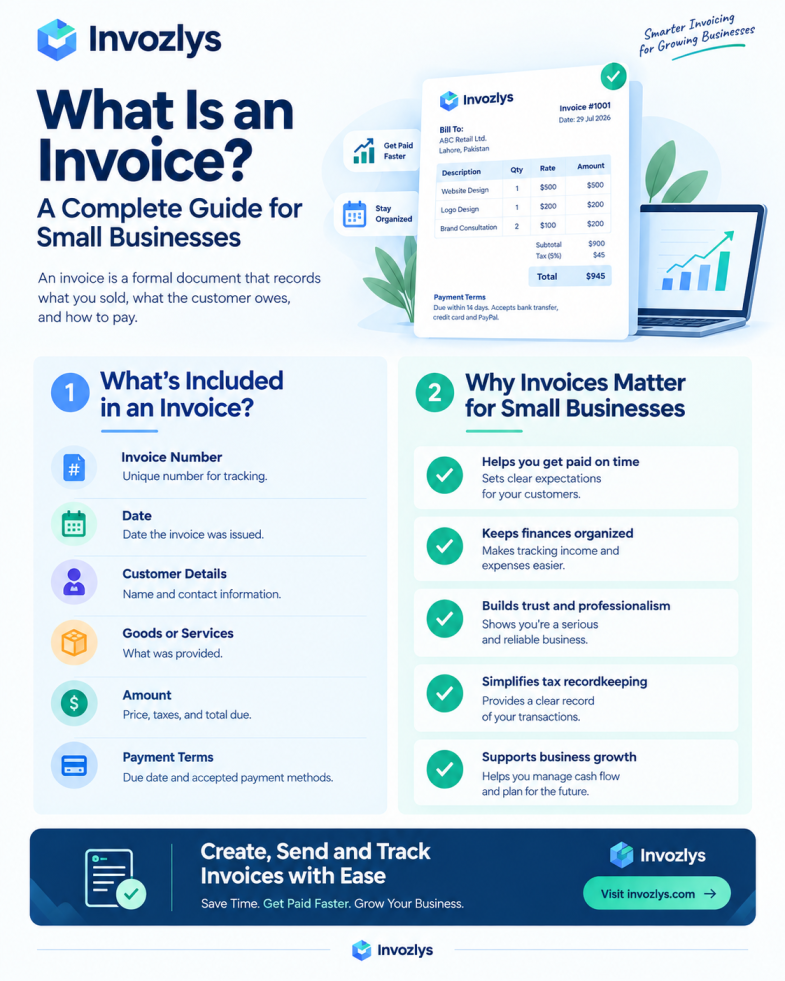
Here’s some good news: unlike countries with a national VAT system, the US doesn’t have one universal invoice format every business must follow. But that doesn’t mean “anything goes.” Between IRS recordkeeping rules and state-level sales tax laws, there’s a practical standard most invoices should meet. A solid invoice generally includes:
- Your business name, address, and contact information
- Your client’s name and billing details
- A unique, sequential invoice number — this matters more than people think; gaps in your numbering are exactly what draws attention during a review
- The invoice date and payment due date
- An itemized description of the products or services provided, with quantities and rates
- The subtotal, any sales tax (shown separately, at the correct rate for your state), and the total amount due
- Your accepted payment methods (bank transfer, card, check, ACH, etc.)
- Payment terms, including any late fees, stated clearly up front not sprung on a client after the fact
Sales tax is the part that trips people up most, since it’s set state by state rather than federally. If you’re not sure whether you need to charge it, it’s worth a quick check with your state’s department of revenue or a bookkeeper but on the invoice itself, the rule is simple: show it as its own line, not buried in the total.
Common Invoicing Mistakes (and How to Avoid Them)
- Skipping the invoice number — even solo freelancers need this for their own records, not just the client’s.
- Vague line items like “services rendered” instead of what was actually done.
- No due date, which quietly tells clients that paying whenever is fine.
- Inconsistent formatting across invoices, which looks unprofessional and makes bookkeeping harder later.
- Forgetting to keep copies. Every invoice you send should be saved somewhere you can find it come tax season.
None of these mistakes are complicated to fix. They just require a system — which is exactly where a free, reliable invoice generator earns its keep.
The Easiest Way to Create a Professional Invoice
You don’t need accounting software or a design background to send an invoice that looks like it came from an established business. Invozlys’ free invoice generator lets you build a clean, itemized, professional invoice in minutes, no sign up, no software to install, and no subscription to remember to cancel.
It’s built to cover the fields above automatically, so you’re not left guessing what to include. Once it’s filled out, you can download it and send it straight to your client.
It’s one of several free tools available on the Invozlys homepage, alongside calculators for expense tracking, profit margins, and more — all built for freelancers and small business owners who’d rather spend their time working than wrestling with spreadsheets.
Frequently Asked Questions
Profit margin is calculated by subtracting your total costs from your revenue, then dividing that number by your revenue, and multiplying by 100 to get a percentage. For example, if you earn $1,000 in revenue and your costs are $600, your profit is $400 — a 40% profit margin. You can skip the manual math with a free profit margin calculator that does it instantly.
Yes. The Invozlys invoice generator is completely free to use, with no sign up required and no hidden fees. You can create and download as many invoices as you need without providing payment information or creating an account.
There’s no federal law requiring a specific invoice format, but a unique, sequential invoice number is standard practice and strongly recommended. It makes your records easier to track and is one of the details the IRS looks for as evidence of consistent, transparent bookkeeping.
It depends on your state, what you sell, and whether you have a tax obligation (nexus) where your client is located. Rules vary significantly across states, so when in doubt, check with your state’s department of revenue or a tax professional, and always show sales tax as its own line item rather than folding it into the total.
An invoice is a request for payment, sent before or at the time of a sale, that outlines what’s owed. A receipt is proof that payment has already been made. Businesses typically issue an invoice first, then a receipt once the client pays.